![[personal profile]](https://www.dreamwidth.org/img/silk/identity/user.png) ysabetwordsmith posting in
ysabetwordsmith posting in ![[community profile]](https://www.dreamwidth.org/img/silk/identity/community.png) birdfeeding
birdfeedingToday we visited the Charleston Food Forest. These pictures show the front and right side.
The front center view of the food forest shows the entrance path and information sign.

The left side of the front is mostly still dormant. The grass is green though.

The right front has some trees blooming.

These green shoots in the front might be garlic chives.

This wild indigo is leafing out.

Here is a closeup of the full sign.

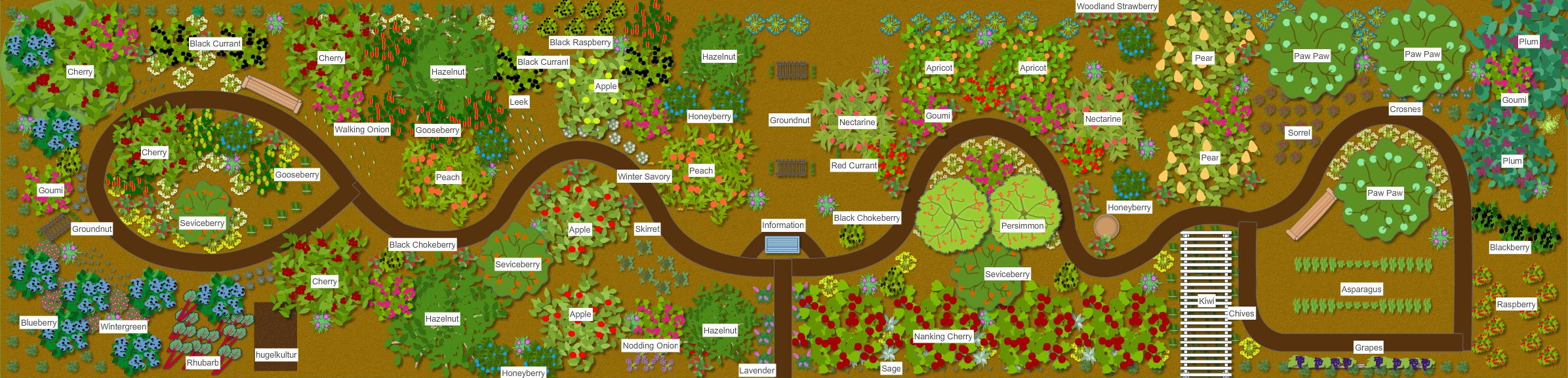
This closeup shows the map of the food forest.

This closeup shows the lower part of the sign.

This Nanking cherry bush is blooming.

Russian comfrey is sprouting in several places.

The nectarine tree is just starting to bloom.

The nectarine flowers are pink.

The fruit trees have been pruned back pretty hard, presumably to keep them small enough to harvest from the ground.

Some of the paths have been freshly mulched, which makes it much easier to find them. This one runs between the asparagus patch (left) and grape arbor (right).

This sign marks the raspberry patch.

The raspberry canes are starting to leaf out.

This end of the patch has blackberries.

The blackberry canes have tiny green leaves too.

This sign marks a plum tree. I'm not sure what the bug is; it looks similar to a milkweed bug.

The plum tree is in full bloom.

The plum blossoms are tiny and white.

Purple violets are beginning to bloom. These are actually edible too, both the leaves and the flowers.

This sign marks the red-veined sorrel.

Red-veined sorrel looks flashy but tastes terrible -- harsh and bitter. It might appeal to people who like spicy mesclun mix though.

The front center view of the food forest shows the entrance path and information sign.

The left side of the front is mostly still dormant. The grass is green though.

The right front has some trees blooming.

These green shoots in the front might be garlic chives.

This wild indigo is leafing out.

Here is a closeup of the full sign.

This closeup shows the map of the food forest.

This closeup shows the lower part of the sign.

This Nanking cherry bush is blooming.

Russian comfrey is sprouting in several places.

The nectarine tree is just starting to bloom.

The nectarine flowers are pink.

The fruit trees have been pruned back pretty hard, presumably to keep them small enough to harvest from the ground.

Some of the paths have been freshly mulched, which makes it much easier to find them. This one runs between the asparagus patch (left) and grape arbor (right).

This sign marks the raspberry patch.

The raspberry canes are starting to leaf out.

This end of the patch has blackberries.

The blackberry canes have tiny green leaves too.

This sign marks a plum tree. I'm not sure what the bug is; it looks similar to a milkweed bug.

The plum tree is in full bloom.

The plum blossoms are tiny and white.

Purple violets are beginning to bloom. These are actually edible too, both the leaves and the flowers.

This sign marks the red-veined sorrel.

Red-veined sorrel looks flashy but tastes terrible -- harsh and bitter. It might appeal to people who like spicy mesclun mix though.